
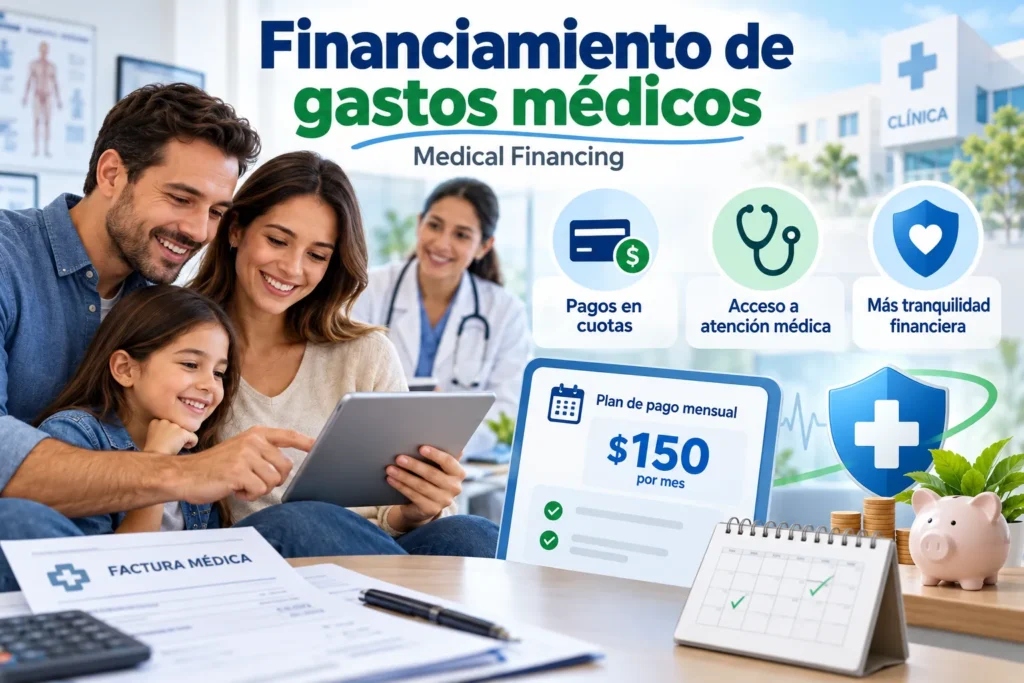
Medical Financing refers to the different ways a person may pay medical bills when they cannot cover them immediately. In the United States, these options may include hospital payment plans, medical credit cards, lines of credit, financial assistance programs, and discounts for patients with limited income.
Before accepting a loan or medical credit card, the Consumer Financial Protection Bureau (CFPB) recommends first asking whether the hospital offers financial assistance or charity care, because some people may qualify for free or discounted care without taking on new debt. Consumer Financial Protection Bureau
💵 What Is a Medical Payment Plan?
Some hospitals and providers offer medical payment plans that allow a large bill to be divided into monthly payments.
These plans may be administered directly by the hospital or by an outside financial company. Some may offer interest-free payments, while others include interest or promotional terms. Consumer Financial Protection Bureau
Before accepting a plan, it can help to ask:
- Does it charge interest?
- Is there an upfront fee?
- How long is the repayment term?
- What happens if a payment is late?
- Can the balance be sent to collections?
- Is there an interest-free repayment plan?
The CFPB recommends first trying to negotiate an interest-free payment plan when possible. Consumer Financial Protection Bureau
💳 What Are Medical Credit Cards?
Medical credit cards are cards or lines of credit designed to pay for certain medical services.
They may be used for expenses such as:
- Medical procedures.
- Dental care.
- Surgeries.
- Specialized treatments.
- Other healthcare services accepted by the issuer.
Some offer promotional periods with deferred interest.
This may seem attractive because interest is not charged during the promotional period. However, there is an important risk: if the balance is not fully paid before the promotion ends, high interest may be applied to the financed amount. The CFPB warns that some options may exceed 25% interest after the promotional period. Consumer Financial Protection Bureau
⚠️ What Should You Review Before Financing a Medical Bill?
Before signing an agreement, it is important to check:
- APR.
- Interest rate.
- Monthly payment.
- Length of the loan.
- Deferred interest.
- Late fees.
- Total financing cost.
- Penalties.
- Possible effects on your credit score.
A small monthly payment does not necessarily mean the financing is inexpensive.
For example, extending a debt over several years can reduce the monthly payment but significantly increase the total amount paid.
❤️ Financial Assistance and Charity Care
Before using credit, it is important to ask about Financial Assistance programs.
The CFPB explains that these programs, also known as charity care, may provide free or discounted medical care to people who need help paying their bills. They may benefit both uninsured patients and insured patients whose expenses are too high. Consumer Financial Protection Bureau
Nonprofit hospitals subject to federal rules must establish a written Financial Assistance Policy (FAP). Internal Revenue Service
This policy must explain:
- Who may qualify for assistance.
- Whether care may be free or discounted.
- How charges are calculated.
- How to apply.
- What documents may be required. Internal Revenue Service
🏨 Do All Hospitals Offer Assistance?
Tax-exempt hospitals subject to the applicable section 501(r) rules must maintain a formal financial assistance policy. Some private for-profit hospitals may also offer their own discounts or programs. Consumer Financial Protection Bureau
Rules may also vary by state. Some states have additional laws requiring free or discounted care for certain patients based on income. Consumer Financial Protection Bureau
It is therefore useful to specifically ask about:
Financial Assistance Policy, Charity Care, or Patient Financial Assistance.
🧾 What If the Bill Is Already in Collections?
The fact that a medical bill is already in collections does not necessarily mean assistance is no longer available.
The CFPB notes that a person may still try to apply for charity care or financial assistance even if the debt is in collections or a lawsuit related to the bill has already started. Consumer Financial Protection Bureau
You may also ask the debt collector to temporarily pause collection efforts while the hospital reviews the assistance application.
🤝 Can a Medical Bill Be Negotiated?
Yes. The CFPB recommends first checking that the bill is accurate and confirming which portion should be covered by insurance.
It may also be possible to:
- Negotiate a reduction.
- Request a discount.
- Ask for a payment plan.
- Ask about charity care.
- Look for nonprofit organizations that provide assistance. Consumer Financial Protection Bureau
Before paying the bill with a regular credit card, it may be worth asking whether less expensive alternatives are available.
📉 Can Medical Debt Affect Credit?
Yes, depending on how the debt is handled and the financial product used.
If a medical bill becomes credit-card or loan debt, it may begin to function like any other credit obligation. Late payments, high balances, or nonpayment may have financial consequences.
The CFPB particularly warns that converting a medical bill into medical-card debt may reduce some later negotiation options. Consumer Financial Protection Bureau
✅ What Should You Do First?
Before accepting Medical Financing, it may help to follow this order:
- Review the bill.
- Confirm what insurance covers.
- Ask about Financial Assistance / Charity Care.
- Request available discounts.
- Ask about an interest-free plan.
- Compare APR and costs before using credit.
Review Options for Paying Medical Expenses
Review official information about medical payment plans, medical credit cards, financial assistance, charity care, and options for paying medical bills in the United States.
🏥 REVIEW OFFICIAL INFORMATIONOfficial source: Consumer Financial Protection Bureau


